Your one-stop guide to dice, events, stickers, landmarks, and building the biggest empire on the board.
Monopoly GO has grown from a fun spin on the classic board game into a full-blown live-service experience, with new events, tournaments, and sticker seasons launching almost every day. That’s exciting – but it also means new and returning players can feel lost fast.
This guide curates every single core strategy into one place, from your very first roll to late-game Landmark optimization, so you always know where to focus your dice, your time, and your energy.
Bookmark this page. We’ll keep it updated as the game evolves, and we’ll link out to deep-dive guides on each topic below.
How Monopoly GO Actually Works
At its core, Monopoly GO is a dice-rolling mobile board game layered with collectible stickers, live events, and social features. Each roll moves your token around a themed board. Landing on different tile types triggers different outcomes:
- Property tiles: Landing on this type of tile lets you build or upgrade a set, increasing the rent you collect when friends land on it.
- Bank Heist / Shutdown tiles: this allows you to steal cash from friends or temporarily shut down their properties so they can’t collect rent.
- Chance and Community Chest tiles: trigger mini-games like Cash Grab or bonus rewards.
- Landmark tiles: a late-board feature where you invest cash to permanently boost your overall ranking and earnings.
- Go/Jail/Free Parking – the classic board-game tiles, each with a modern Monopoly GO twist (passing GO earns a flat cash bonus, for example), the jail locks you up and lets you roll three times, if you roll doubles, you break out, if you don’t roll any doubles, you will pay a fine.
Every few boards, the game unlocks new mechanics – Landmarks, Peg-E, Partner Events – so the strategy that works on Board 3 looks completely different by Board 10 and beyond. Rather than treating the game as one static ruleset, it helps to think of it as a series of stages, each with its own priorities. That’s what the next section breaks down.
The Board Progression Arc
New players often make the mistake of playing every board the same way. In reality, your priorities should shift as you climb:
Early boards (1–4): Learn the rhythm. Focus on completing property sets to build a baseline income, get comfortable with Shutdowns and Bank Heists, and start following the daily event calendar so it becomes a habit rather than an afterthought.
Board 5: Major Events unlock. This is a meaningful milestone, this is where it all begins to actually get serious, you gain access to a whole category of social events, from partner events to treasure hunt AKA the dig event to blocks mini game.
Pro Tip: It’s worth slowing down slightly here to carefully pick your Partner Event teammate, since Partner Events lock you in for the event’s duration and random teammates might just not participate, which will leave you in a very difficult position and make it very hard for you to complete the event and get the massive rewards it offers.
Mid boards (6–9): Landmarks start to matter. Cash starts flowing fast enough that idle money sitting in your bank is a missed opportunity. This is where a deliberate Landmark upgrade strategy (below) starts paying real dividends.
Later boards (10+): Optimize, don’t just progress. By this stage you likely have every core mechanic unlocked. The name of the game becomes efficiency; squeezing more value out of the same number of dice by stacking events, timing purchases, and trading smartly rather than grinding harder.
Treat board progression as a signal for when to introduce a new strategy layer, not just a distance counter.
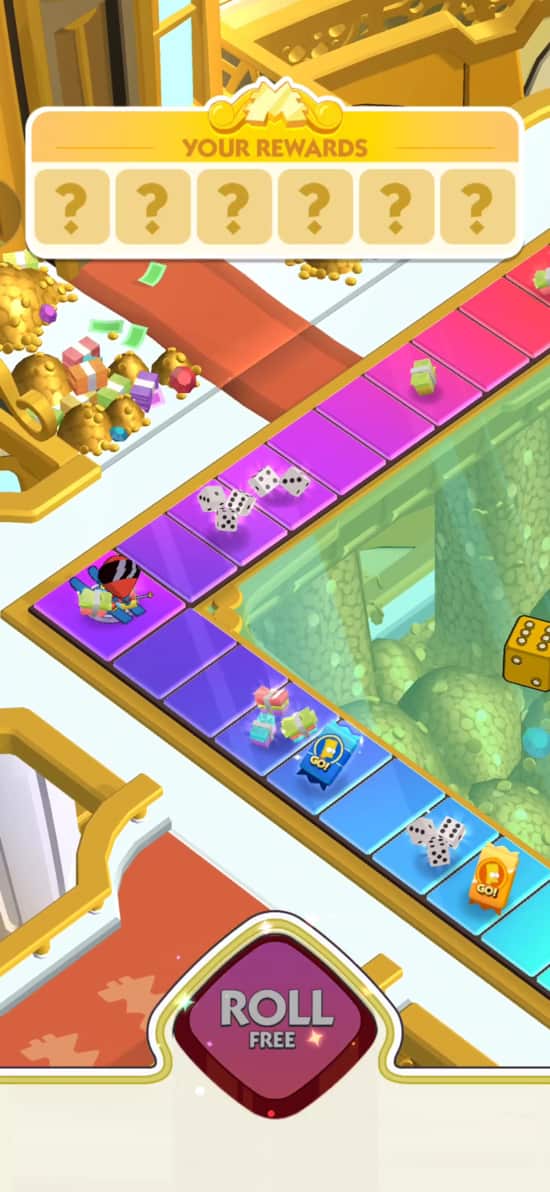
Special Mention Bank of Monopoly: This is a bonus board that first appears once you clear Board 100, then recurs on a predictable schedule every 10 boards after that (Board 110, 120, 130, and so on).
Unlike the regular boards you play through, it’s multicolored rather than themed, and it functions less like a board you navigate step by step and more like a straightforward reward tray where you just come in and pack the free rewards of dice, cash, tokens and sticker packs.
When it triggers, you get a set number of free rolls Lowest being 5 and maximum being 9 (the exact count scales with your level), and each roll pays out a reward directly rather than moving you around tiles with property or event logic attached.
Because there’s no navigation or tile strategy involved, there’s not much decision-making required on your end, just come on the board, keep rolling and hope it lands on more dice rewards that any other reward tile. Since it’s a guaranteed bonus payout window rather than a mechanic you need to actively optimize.
Pro Tip: Use up all your cash to build landmarks and keep an eye out for how much it costs to build a board, once you spend your cash down & you believe the remaining cash will not be enough to build a new full board, do not try to start building the board at all, just leave it empty, that way, you will only be at risk of losing that little cash if your bank gets heisted, but you will guarantee that your board can not get attacked, which means you will never get backtracked in progress.
Dice Strategy: Your Most Valuable Resource
Dice are the currency that makes everything else possible, this is the crude oil of the entire game, no dice, no progress, no stickers, no tournament points. Almost every strategic decision in Monopoly GO comes back to how you manage your dice supply.
Infact the entire reason we are creating this guide is to teach you how to manage your dice, and how to get free dice without having to buy those expensive deals in the MonopolyGo in-game shop.
Don’t hoard dice past an event’s window. Dice sitting in your bank aren’t earning you sticker packs or tournament points. If a strong event is live, spend down rather than saving “for later”, later is often a weaker event that consumes dice rather than it improves.
Time big dice spends around overlapping events. The best sessions stack a Tournament, a Flash/Special event, and your daily Quick Wins together so every single roll counts three times over instead of one.
Use free dice links daily. Community-shared reward links are one of the easiest ways to stack extra rolls at zero cost. Because these links expire and refresh constantly, checking a reliable, frequently-updated source is worth building into your daily routine, and it only takes about 1 minute to completely claim all free dice links – we maintain one in our companion guide below.
Watch for High Roller windows. These temporarily boost minimum roll values, meaning the same number of rolls covers more board distance and triggers more tile events, effectively multiplying the value of every dice you spend during the window.
Think in “dice efficiency,” not dice count. A roll spent during a stacked event window might be worth three or four times a roll spent during a quiet period. When you’re deciding whether to spend now or wait, ask what else is active at that moment, not just how many dice you have, one major way to stay on top of the live events is to keep an eye on our today’s events posts which me publish every single day.
Set a soft cap on hoarding. It’s tempting to bank dice waiting for a big event, but large stockpiles sitting idle for days are lost value. A reasonable middle ground is to keep a modest reserve for genuinely big events (like a major Partner Event) while still spending steadily on the daily calendar.
For the full breakdown of every dice source, how to get free dice, how to never pay a dime for dice ever again, plus the secret tricks we used to gain over 500k dice, download our companion guide: Monopoly GO Free Dice Bible.
Understanding the Event System
Monopoly GO’s event calendar can look chaotic at first, but it breaks down into five repeating categories. Understanding each one, and how they interact, is the single highest-leverage thing you can learn.
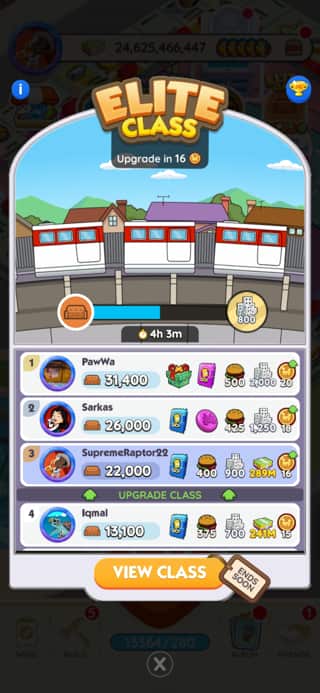
Tournaments: Competitive events that typically runs for a day. You collect cash & special points by landing on the railroad tile and either shutting down other tycoon’s landmarks or heisting their banks, the points you collect will be stacked up and you will climb a leaderboard against similarly matched players for milestones and ranking rewards.
Rewards scale with your final rank, so these reward focused, front-loaded dice spending rather than a slow trickle.
Special/Flash Events: Shorter windows, often under an hour, that boost a specific in-game action (extra cash from a certain tile type, discounted Landmark upgrades, Higher rolling threshold, Mega Heist which rewards with higher bank heist cash and points on the leaderboard, etc.).
These are best used the moment they go live & you have activated it, since the boost disappears the second the timer ends, there’s no “banking” the bonus for later.
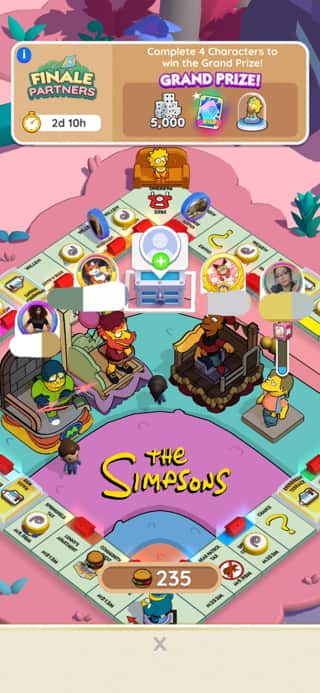
Partner Events: Social events unlocked once you reach Board 5. You team up with 4 friends, collect event tokens by playing, and spend them to build shared attractions for milestone rewards.
Choose your partner carefully, most Partner Events don’t let you switch once you’ve committed, and an inactive partner can significantly slow your joint progress.
Quick Wins: A short daily checklist (like “Pass GO twice” or “Land on Chance twice”) that resets every day. They’re low effort individually but stack toward a weekly bonus, so treat them as a daily habit rather than an optional extra.
Community Chest: A recurring task-based event that runs alongside whatever else is live, you will partner with 3 friends to complete same tasks on both sides, rather than competing in it.
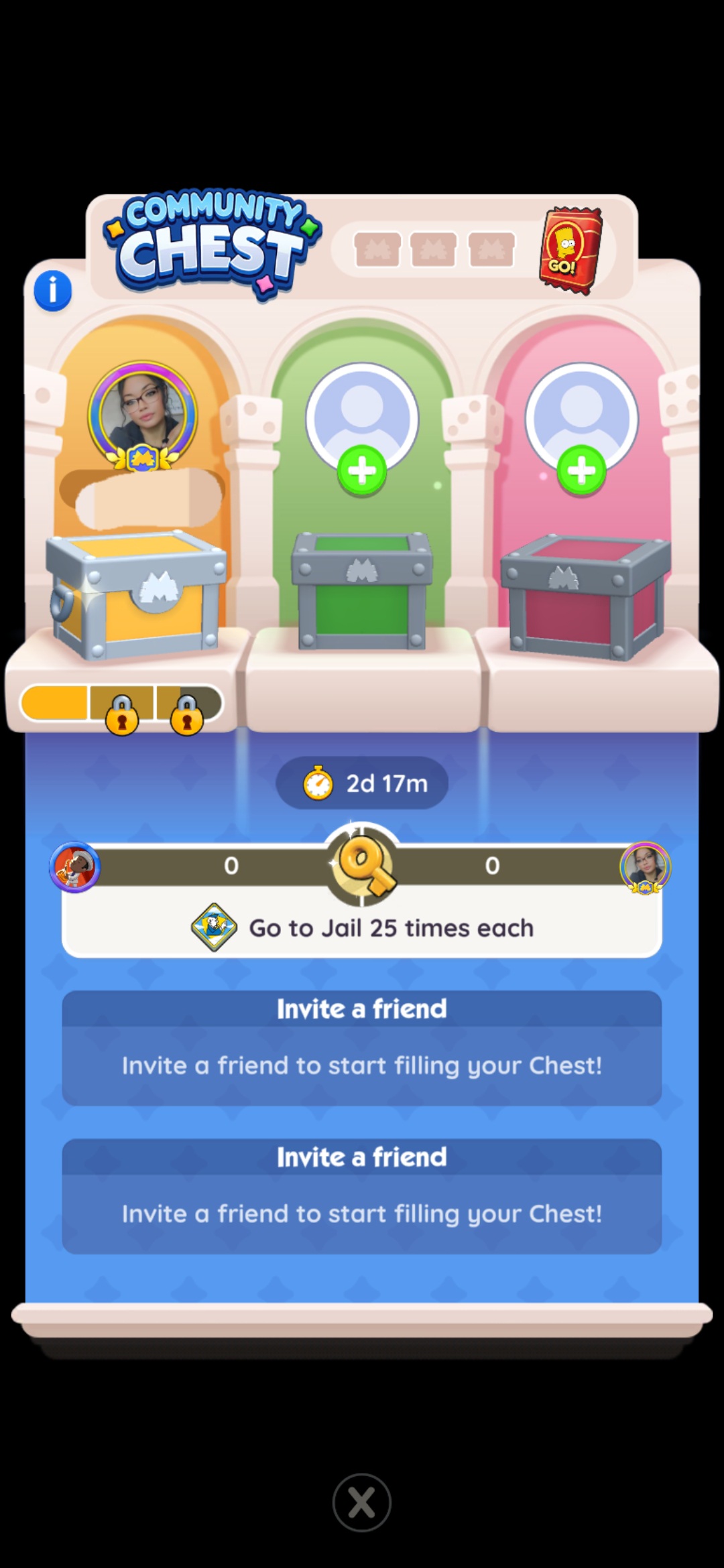
It presents a set of small in-game tasks (roll the dice X times, collect cash from a few friends, escape jail 125 times), often in an escalating chain where finishing one task unlocks the next and completing them unlocks various rewards which includes free dice rewards, sticker packs, flash events or tokens and Emojis.
Because the tasks are usually things you’re already doing during a normal session, Community Chest can often be cleared as a side effect of playing through a Tournament or Flash Event, making it one of the closer-to-free dice sources in the game. It’s worth checking in on periodically throughout the day rather than treating it as a one-sitting task.
How they overlap. The event calendar is designed so multiple categories run simultaneously, a Tournament might be live at the same time as a Flash Event and your daily Quick Wins. The winning approach is stacking: check the schedule on our today’s events posts before you start rolling, and time your heaviest dice spending for the window where the most events overlap, so a single roll can contribute to two or three or more reward tracks at once.
Tournament Strategy
Tournaments deserve their own section because they’re where a lot of players either overspend or underspend without a plan.
- Check the reward tiers before you commit dice. Some tournaments have a steep jump in value between the mid tier and top tier, worth pushing for. Others flatten out quickly, meaning the last push of dice isn’t worth it.
- Front-load your effort. Because leaderboard position matters, an early push can secure a favorable bracket, while waiting until the final hours often means competing against players who’ve already built a big lead.
- Not every tournament is worth full effort. If the reward doesn’t match your current goals (say, cash when you’re actually short on stickers), it’s fine to play it lightly and save your dice for the next event instead.
- Watch your matchmaking bracket. Rewards and difficulty scale with player level, so don’t assume a tournament that felt easy at one stage will feel the same after you’ve leveled up.
Sticker Collecting & Trading
Sticker albums run in themed seasons and are where a lot of the game’s long-term goals live. This is also the area where trading skill makes the single biggest difference in how fast you progress.
Prioritize completing sets, not hoarding packs: A full set finishes the album page and often unlocks a reward tier, duplicates sitting unused don’t help you and only exist as trade fodder.
Trade duplicates instead of opening more packs: Community trading groups (Discord, Facebook, Reddit) let you swap dupes for the specific stickers you’re missing, which is far more efficient than relying on luck from pack pulls alone.
I have a friend who spends a lot of time trading all her duplicates so that she can fill up the entire album with all tradable stickers, once she has traded all tradables and become gold locked, she waits for golden blitz event while also playing for sticker packs to try and get the golds, its a front footed strategy that allows her to complete the albums at least 1x every album season.
Learn to value your duplicates: Rare stickers you’re holding multiples of are valuable trade currency, don’t give away a 4-star duplicate for a common one without getting equivalent value back.
Time pack openings around sticker-boost events: When a sticker-boost Flash Event is active, pack odds or drop rates are often improved since you get 50% more stickers from each pack, opening packs during that window increases your chances of getting a new sticker further than doing so during a normal period.
Landmarks & Shutdown Strategy
Landmarks are one of your best long-term investments, cash you put into a Landmark permanently boosts your overall earning rate, your ranking etc, unlike a one-time reward.
- Prioritize Landmarks with the best cost-to-boost ratio rather than always upgrading whichever is cheapest in the moment. A slightly pricier upgrade that meaningfully increases your income rate often outperforms several small, cheap ones. Try to always build the more expensive landmarks first, so that whenever you land on them, you will get rewarded with more cash, you will get even more cash if you land on them and a player is present there.
- Save large cash reserves for BUILDER’s BASH – Landmark-discount Flash Events: when upgrade costs can drop significantly by up to 50% – the same cash can buy noticeably more permanent boost during these windows.
Pro Tip:
Don’t leave your board half built, always complete the building, or just reserve the cash, this way you would prevent any attackers from attacking your landmarks, even while youre away. This system literaly preserves your progress.
Secondly, always look for a friend that has their shield down and focus all your attacks on them, by doing this, you will ensure that youre getting the maximum reward of cash and points from each shutdown.
Cash Management
Cash is easy to overlook next to dice and stickers, but poor cash management quietly slows a lot of players down.
- Avoid sitting on large piles of idle cash. Like dice, cash that isn’t working for you (via Landmark upgrades) is lost value, delayed progress – especially since friends can steal it via Bank Heists if you’re not spending it down.
- Plan around Mega Bank Heist windows. If a Bank Heist-boosted (Mega Heist) event is live, it’s often smarter to spend your cash reserves before you’re online less, rather than leaving a tempting pile sitting exposed.
- Mega Heist flash event is also the best time to rob the banks of others and build your cash reserves. I have literally got 50x more cash from mega heist a couple times.
- Sync cash spending with Builders Bash rather than upgrading reactively whenever you happen to have enough saved.
Mini-Games
Mini-games are live on a regular basis each month and are always sandwiched between events like Partner events, race and the likes. They offer sweet rewards that if played well, can help you fill your dice, cash or album fast.
Tokens for these mini-games are usually collected from milestone & railway events, so you do not even have to focus specifically on spending extra dice to collect them, just keep playing as you normally would and the tokens needed for the mini-games will be collected. They are always worth playing whenever they’re live, since the cost is low relative to the potential rewards.
Finding Trading Partners & Communities
Because so much of Monopoly GO is social – sticker trading, Partner Events, free dice sharing – being active in a community pays off substantially over time.
- Active Discord servers or Facebook groups: dedicated to your region or timezone help trades happen quickly, since sticker trades typically need both sides online around the same time.
- Reddit communities that track daily free dice links and event schedules are a reliable, frequently-updated source worth checking as part of your daily routine.
- Keep your in-game friends list full, since friend interactions (Bank Heists, Shutdowns, gifting) are tied to how many active friends you have – an inactive friends list quietly slows your growth & weakens your potential.
- Reputation matters in trading groups. Following through on agreed trades builds a track record that makes it easier to land good trades for rare stickers later.
Pro Tip:
When trading for the first time with a new trader, be careful and always make sure to use the swap button, which puts your sticker in escrow and the other player must put theirs in escrow and the trade will only be completed when you both agree that the correct stickers are in escrow.
Free-to-Play vs. Spending Money
This is a personal decision, but a few principles apply regardless of budget:
- Free dice sources compound: Daily logins, Quick Wins, community links, and event rewards add up to a meaningful amount of progress without spending anything – most of the strategies in this guide are built around maximizing exactly those sources.
- If you do spend, time it around boosted value windows – discounted Landmark events, sticker-boost events, or dice-pack bonus offers – rather than buying during a normal-price window.
- Small, well-timed purchases usually outperform large, untimed ones. Spending a modest amount during a genuinely boosted event tends to go further than a bigger spend with no timing strategy behind it.
Common Beginner Mistakes
- Spending dice with no plan: Rolling constantly without checking the event calendar wastes a lot of value that stacking would have captured.
- Chasing every tournament: Lower-priority tournaments can burn through your dice supply for a reward that isn’t worth it, pick your battles based on the reward tier, not just because a tournament happens to be active.
- Ignoring Quick Wins: They’re small individually but add up to a meaningful weekly bonus for almost no extra effort.
- Not trading stickers: Sitting on duplicates instead of trading slows down album completion significantly compared to active traders.
- Letting cash sit idle: Uninvested cash is a missed Landmark opportunity and a target for friends’ Bank Heists.
- Picking a Partner Event teammate carelessly: An inactive partner can stall joint progress for the whole event window, so choose someone you know will play consistently.
- Treating every board the same way. Applying early-game habits at Board 10 (or late-game habits at Board 2) usually means missing the priorities that actually matter at that stage.
A Sample Weekly Routine
Putting the whole guide together, here’s what a disciplined week can look like:
- Daily: Check the event calendar first thing, complete Quick Wins, grab free dice links from your community sources.
- When a Tournament is live: Front-load a strong push in the first half of the window to secure a good bracket position, then top up near the close if the reward tier justifies it.
- When a Flash Event overlaps a Tournament: Concentrate your biggest dice spend right there, this is the highest-value moment in a typical week.
- Weekly: Review your sticker album progress and prioritize trading for whichever album is closest to completion.
- Whenever cash builds up: Check for Builder’s Bash flash event before spending; if none is active, you can also manually activate it by focusing on the milsetone event, Builder’s Bash is regularly the 18th reward, the railway event also have it at the 35th reward. But if youre unwilling to play to activate them and your reserve is large, just complete as many boards as possible, since that increases your networth anyway, rather than leaving it idle.
- Ongoing: Stay active in your trading community and keep your friends list full and engaged.
This guide is part of our ongoing Monopoly GO daily strategy hub – check back for links to in-depth guides on dice, events, and sticker trading as they go live.